Why 2026’s Best New Music Is Coming Out of Video Game Soundtracks
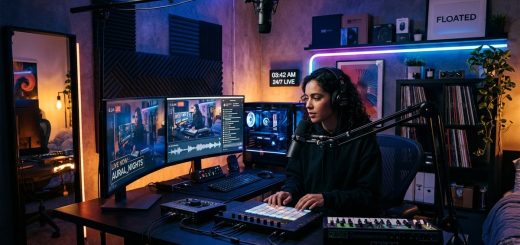
The first time I heard the soundtrack for Stellar Drift earlier this year, I had to stop what I was doing. I wasn’t even playing the game. I was just sitting on my couch, headphones on, watching the credits roll on YouTube. The track shifted from a quiet, trembling piano line into a full orchestral swell that felt more emotionally complex than most of the indie rock records I had reviewed that month. It hit me then: the most interesting, ambitious, and emotionally resonant music being released in 2026 isn’t coming from Nashville or Brooklyn. It is coming from inside a console.
In 2026, video game soundtracks have become a dominant force in music culture, blending orchestral composition with electronic experimentation. Composers like Lena Raine and Yoko Kanno are releasing scores that stand alone as albums. This guide breaks down the best video game music 2026 has to offer and shows you how to start listening, even if you never touch a controller.
Why Game Music Finally Got Its Flowers
For years, film scores got the respect while game soundtracks were treated as background noise. That has completely flipped. The budgets for AAA game scores now rival Hollywood productions. More importantly, composers are being given creative freedom that studio musicians in the traditional album cycle can only dream of.
A game soundtrack needs to work for hours. It has to adapt to player choices. It needs to be interesting on the 50th listen, not just the first. That kind of pressure forces composers to write deeper, more modular pieces. The result is music that feels alive.
Take the score for Echoes of the Machine, released in March 2026. Composer Jessica Curry built the entire album around a single, repeating melodic phrase that mutates across 40 tracks. You can listen to it as a standalone ambient record, but when you hear how the melody shifts during a boss fight versus a quiet exploration scene, you realize you are listening to something that functions almost like a living organism.
The 2026 Soundtrack Lineup You Need to Hear
If you are new to game scores, the sheer volume can be intimidating. Hundreds of soundtracks drop every year. Here are the essential releases from 2026 that prove this medium is producing the best new music of the year.
Standout Scores of the Year
- Stellar Drift (Composer: Lena Raine) : A blend of hyperpop synths and live string quartets. The track “Orbit Decay” has become a viral hit on TikTok, not because of a game clip, but because people are using it for study playlists.
- The Withering Deep (Composer: Yoko Kanno) : Kanno returned to gaming after a long hiatus and delivered a sprawling, jazz-infused score that sounds like a lost 1970s fusion record. It is the most surprising album of the year, period.
- Neon Shogun (Composer: Chip Tanaka) : A full-throttle cyberpunk soundtrack that mixes industrial noise with traditional Japanese instrumentation. It is aggressive, loud, and unapologetically weird.
- Garden of Salt (Composer: Austin Wintory) : Wintory composed a minimalist score using only field recordings from coastal salt flats. It is eerie, beautiful, and completely unlike anything else on streaming platforms right now.
How to Listen to Game Soundtracks Like an Album
You do not need to own a gaming PC or a console to enjoy these. Every major soundtrack is available on Spotify, Apple Music, and Bandcamp. Here is a simple process to get started:
- Open your streaming service and search for the game title plus the word “soundtrack” or “original score.”
- Look for the “Original Game Soundtrack” or “Official Score” album. Avoid fan compilations or remixes for your first listen.
- Press play from track one. Do not skip. Many game scores are designed with a narrative arc, just like a concept album.
- Close your eyes. Game music is written to paint a picture. Let your imagination build the world instead of the screen.
- If you like a specific composer, search their name directly. Many of them, like Jessica Curry and Austin Wintory, have standalone concert albums and solo projects.
The Techniques That Make Game Music Stand Out
Game composers use a few specific tricks that give their music an edge over traditional pop or rock production. Understanding these can change how you listen.
| Technique | What It Does | Example from 2026 |
|---|---|---|
| Adaptive layering | Music shifts based on player action. | Stellar Drift adds drum layers during combat. |
| Leitmotif reuse | A melody returns in different emotional contexts. | The Withering Deep uses a saxophone theme for grief and victory. |
| Generative elements | Software creates slight variations each time. | Garden of Salt uses procedural audio to keep the score unique. |
| Spatial audio mixing | Sound moves around the listener in 3D space. | Neon Shogun places instruments behind and above the listener. |
“The biggest difference between writing for a film and writing for a game is that you are writing for a relationship, not a timeline. The player is not passive. They are making choices. The music has to respond to those choices without breaking the mood.” — Lena Raine, in a 2026 interview with The Verge.
Why Your Standard Music Playlist Is Missing Out
Most people discover new music through radio, playlists, or social media. Those channels are great, but they are built for short attention spans. A three-minute pop song is designed to hook you in the first 10 seconds. A game score is built for endurance. It rewards patience.
If you have been feeling like modern music has become too formulaic, too safe, or too focused on the chorus, game soundtracks are the antidote. They are long. They are weird. They take you on a journey. The best video game music 2026 has to offer is not background noise. It is foreground art.
A Practical Guide to Building Your Own Game Music Library
You do not have to spend hours digging through forums. Here is a bulleted list of the easiest ways to build a collection of high-quality game scores this year.
- Start with a genre you already like. If you love ambient, start with Garden of Salt. If you love electronic, try Neon Shogun.
- Use the “Fans Also Like” feature on streaming apps. Search for “Lena Raine” and see what the algorithm suggests.
- Follow game music labels on social media. Labels like Materia Collective and iam8bit release vinyl and digital scores regularly.
- Check out the annual Grammy category for Best Score Soundtrack for Video Games. The 2026 nominees are a perfect entry point.
- Look for live performances. Many game composers tour. Seeing a score performed by a live orchestra changes how you hear the recording.
The Artists Behind the Sound
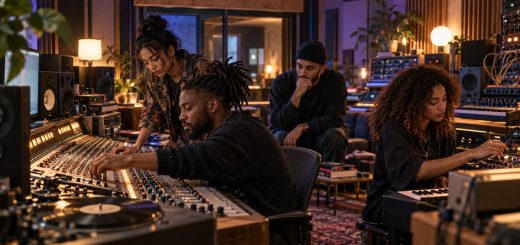
The composers themselves are becoming celebrities in their own right. This shift mirrors what happened with film composers like John Williams or Hans Zimmer. In 2026, you can find interviews, behind-the-scenes documentaries, and even Twitch streams where composers talk through their creative process.
If you want to understand why this music feels so fresh, look at how these artists are blending genres. Yoko Kanno pulls from jazz and bossa nova. Lena Raine mixes hyperpop with classical minimalism. Chip Tanaka uses industrial noise and Hokkien folk songs. These are not people trying to write a hit single. They are building sonic worlds.
This is a great moment to check out our feature on how emerging musicians are redefining genre boundaries in the digital age. The same spirit of experimentation driving game scores is also reshaping the indie music landscape.
How to Spot a Truly Great Game Soundtrack
Not every game score is worth your time. Some are just functional. Here is how to tell the difference between a serviceable score and a genuinely great album.
- The music works outside the game. If you can listen to a track while driving, studying, or cooking and feel something, it is good. If you need the visuals to understand it, it is just sound design.
- The composer has a signature. Great composers have a voice. You should be able to hear a track and guess who wrote it.
- The album has a clear emotional arc. Good game scores take you from tension to release, from quiet to loud, from sadness to hope. If the album feels flat, the score probably is too.
The Cultural Shift That Made This Possible
Part of the reason game soundtracks are having a moment is that the stigma around gaming has faded. In 2026, more adults play games than watch live sports. The audience for these soundtracks is not just teenagers in basements. It is people in their 30s and 40s who grew up with Final Fantasy and Halo and now have sophisticated musical tastes.
Streaming has also leveled the playing field. A soundtrack from a small indie game can sit next to a AAA blockbuster on the same playlist. Algorithms do not care about the source. They care about the sound. This has allowed genuinely experimental work, like the field recordings in Garden of Salt, to find an audience that would have been impossible 10 years ago.
If you are curious about how other unconventional formats are changing music consumption, read our piece on why lo-fi hip hop is the soundtrack of the 2026 creative class. The same cultural forces are at play.
Why You Should Start Listening Today
The best video game music 2026 has to offer is not a niche interest anymore. It is a mainstream cultural force that is producing some of the most inventive, beautiful, and challenging music of the year. Whether you are a die-hard gamer or someone who has not touched a console since the Wii, there is a soundtrack out there that will change how you think about music.
Do not wait for the next album cycle. Do not wait for a friend to send you a link. Open your streaming app right now, search for Stellar Drift or The Withering Deep, and press play. You might just find your new favorite album hiding inside a video game.