Why DIY Recording Studios Are the Backbone of 2026’s Music Scene
The biggest music movement of 2026 isn’t happening in a glass-walled studio in Los Angeles. It is happening in bedrooms, basements, and repurposed garages across the United States. The DIY recording studio has become the engine of modern music, and for good reason. When you can build a setup that rivals a commercial facility for a fraction of the cost, and when distribution is just a click away, the power shifts entirely to the artist. This is not a trend that will fade. It is the new foundation of how records get made.
The DIY recording studio in 2026 is more accessible and powerful than ever. With affordable gear, free software, and online mastering tools, any independent musician can produce radio-ready tracks at home. This article breaks down the must-have equipment, common mistakes to avoid, and a step by step workflow to help you build a studio that gets results.
The 2026 Home Studio Revolution
The shift towards home recording is not new, but 2026 has brought a level of polish and possibility that did not exist five years ago. Studio quality plugins that used to cost thousands of dollars are now available for free or for a small subscription fee. Audio interfaces have dropped in price while their preamp quality has gone up. And the rise of AI assisted mixing tools means you no longer need a degree in audio engineering to get a balanced, loud master.
This is the year the DIY recording studio finally became the backbone of the entire music industry. Major label artists are now recording vocals in their home closets. Billboard charting hits are being mixed on laptop computers. The gatekeepers are gone. If you can hear a sound in your head, you can capture it in your living room.
What You Actually Need to Start
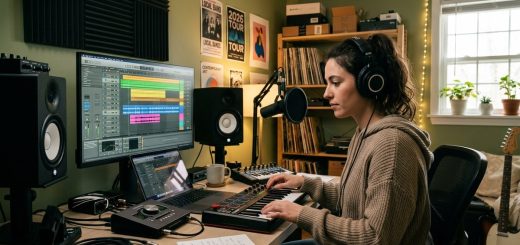
You do not need a room full of vintage gear. The best DIY recording studio 2026 is built around three core components: a reliable computer, a clean audio interface, and a decent microphone. Everything else is a bonus.
- A modern laptop or desktop with at least 16GB of RAM.
- An audio interface with at least two inputs (Focusrite, Universal Audio, or SSL).
- A large diaphragm condenser microphone for vocals and acoustic instruments.
- Closed back headphones for tracking and open back headphones for mixing.
- A Digital Audio Workstation (DAW) like Ableton Live, Logic Pro, or Reaper.
That is your foundation. Spend your money on the interface and the microphone. The computer just needs to be fast enough to run your sessions without crashing. You can find a solid setup for under one thousand dollars if you shop smart.
Common Pitfalls in the DIY Recording Studio 2026
Even with great gear, beginners make the same mistakes over and over. The table below outlines the most frequent errors and the simple fixes that will save your mix.
| Common Mistake | Why It Hurts Your Sound | The Fix |
|---|---|---|
| Recording in a live, reflective room | Comb filtering and boxy tone | Hang blankets or use a portable vocal booth |
| Using too much reverb on the mix bus | Washed out, amateur sound | Use reverb on individual sends instead |
| Monitoring at loud volumes | Ear fatigue and bad mix decisions | Mix at 75dB to 80dB for longer sessions |
| Skipping gain staging | Distortion and noise floor issues | Keep levels peaking at -6dB inside the DAW |
| Not using reference tracks | No target for tonal balance | Import a professional track and compare levels |
These fixes cost almost nothing. A few moving blankets from a hardware store can transform a bedroom into a decent recording space. Learning to set proper gain levels is a five minute adjustment that will change everything.
A Step by Step Workflow for Your DIY Session
Getting a good recording is about process, not luck. Follow these steps every time you sit down to record. They will keep you consistent and save you from wasting hours on bad takes.
- Set up your recording space. Turn off fans, air conditioning, and refrigerators. Place your microphone away from walls and corners. Use a pop filter.
- Check your levels. Speak or sing at your loudest volume. Adjust the gain on your interface so the meter hits around -6dB. Never let it clip into the red.
- Record multiple takes. Do not try to get the perfect take in one pass. Record three or four versions of the same part. You can comp the best sections later.
- Edit before you mix. Trim silence, remove breaths that are too loud, and tune any obvious pitch issues. A clean edit makes mixing much easier.
- Mix in stages. Start with volume levels, then panning, then EQ, then compression. Add effects last. Do not touch everything at once.
- Take a break. After you finish your mix, walk away for an hour. Come back with fresh ears. You will catch problems you missed before.
This workflow works for vocals, guitars, drums, and synths. It is the same process used by producers who charge hundreds of dollars per hour.
Gear That Changed the Game in 2026
The hardware landscape has shifted. A few products have become essential for anyone building a DIY recording studio this year.
The Universal Audio Volt series remains a favorite for its built in analog compression. The SSL 2+ interface gives you that classic console sound for under three hundred dollars. For microphones, the Rode NT1 continues to be the standard for quiet, clean recordings. But the surprise hit of 2026 is the new wave of affordable ribbon microphones. Brands like SE Electronics and MXL now offer ribbon mics for under two hundred bucks, giving home studios access to a warm, vintage tone that was once reserved for high end facilities.
“The best gear is the gear you actually use. I see people buy expensive compressors and then never touch them. A simple setup that you know inside and out will always beat a complex rig that intimidates you.” – Marcus Hale, independent producer and engineer from Nashville.
How to Release Music from Your DIY Studio
Once you have a finished track, the path to listeners is wider than ever. You do not need a label. You do not need a distributor with a contract. Services like DistroKid, TuneCore, and CD Baby will put your music on every streaming platform for a small annual fee.
But the real trick in 2026 is understanding the algorithm. Your DIY recording studio can produce world class sound, but if you do not understand how to promote it, nobody will hear it. Focus on building an email list and posting short video clips of your recording process. Fans love seeing how the sausage is made. A thirty second clip of you recording a vocal take can get more engagement than a polished music video.
For more insight on how the industry is changing, check out our piece on how independent artists are leveraging AI to produce chart-topping hits in 2026. It pairs perfectly with the DIY studio mindset.
The Culture of the Home Studio
There is something special about making music in your own space. No clock is ticking. No engineer is judging your takes. You can experiment without fear. That freedom is why so many of the most interesting records in 2026 come from DIY studios.
Artists are blending genres in ways that commercial studios would have discouraged. A bedroom producer in Ohio can layer lo-fi hip hop beats over field recordings from their backyard. A singer in Texas can record a folk song and then run it through a distortion pedal just to see what happens. The DIY recording studio 2026 is a place of play, not pressure.
If you want to see how this culture is shaping live events, read our guide on 7 underground music festivals shaping the 2026 scene. Many of those acts started in home studios exactly like the one you are building.
The Role of Analog in a Digital World
Even in 2026, analog gear has a place in the DIY studio. But it is not about being purist. It is about character. A single analog compressor on your vocal chain can add warmth that digital plugins struggle to replicate. A cheap tape echo unit can make a synth line feel alive.
You do not need to go broke chasing analog tone. A used DBX 160 compressor can be found for under two hundred dollars. A small mixing board from Yamaha or Mackie can give you that console saturation without the console price. The trick is to use analog gear sparingly. Run your signal through one or two pieces of hardware and then do the rest in the box. That hybrid approach is the secret weapon of many professional home studios.
Building a Community Around Your Sound
The DIY recording studio is not just a place to make music. It is a hub for community. In 2026, the most successful independent musicians are the ones who invite others into their process. Collaborate with other artists in your city. Record a friend’s EP for free just to practice your engineering skills. Start a weekly live stream where you mix a track from start to finish.
People connect with people, not with polished products. If you show the messy, real side of making music, you will build a loyal audience that sticks with you for years. This is the heart of the DIY ethos. It is not about perfection. It is about expression.
For a deeper look at how social platforms are changing the game, read our article on 5 ways social media is transforming music discovery in 2026.
Your Studio, Your Rules
The best part of the DIY recording studio 2026 is that you are in complete control. You decide when to record. You decide what sounds right. You decide when a track is finished. That independence is the most valuable tool in your kit.
Start with what you have. A laptop, a microphone, and a willingness to learn. Do not wait until you have the perfect room or the perfect gear. The music you make today will teach you more than any tutorial ever could. Set up your space, press record, and trust your ears. That is all it takes to be part of the backbone of 2026’s music scene.