Why the 2026 Underground Jazz Revival Is Fueling the Next Generation of Genre-Bending Artists
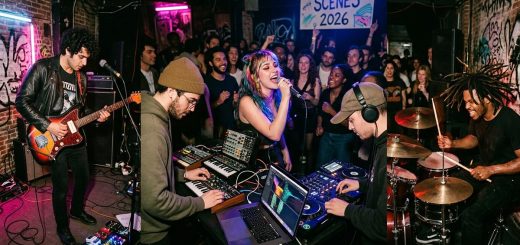
Picture a basement in Brooklyn. A drummer locks into a loop that sounds like a broken sampler. A vocalist hums over a synth pad, then pulls out a trumpet. The crowd does not care about labels. They are here for the feeling. That is the 2026 jazz revival in action. This is not your grandfather’s jazz. It is not even your older sibling’s smooth jazz. This is a raw, genre bending movement where the rules of jazz are just a starting point. Young artists are taking the improvisational spirit of the tradition and welding it to electronic production, hip hop beats, and global folk music. The result is a sound that feels both timeless and completely new. If you have been watching the underground scenes in cities like Los Angeles, Chicago, and London, you already know. Jazz is not just surviving. It is evolving into something that belongs to the next generation.
The 2026 jazz revival is driven by a new wave of genre-bending artists who treat jazz as a living language rather than a historical artifact. By blending live improvisation with electronic production, hip hop, and global rhythms, these musicians are building a vibrant underground scene. For listeners and creators alike, the movement offers a blueprint for making music that feels both personal and borderless.
Where the Revival Started
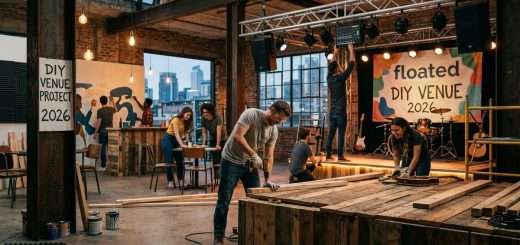
The seeds of this revival were planted years ago. Acts like Robert Glasper, Kamasi Washington, and the late greats of the London jazz scene pushed the boundaries of what jazz could sound like in the 2010s. But 2026 feels different. The underground has become a laboratory. Small venues, DIY spaces, and even living rooms host sessions where a set might start with a free jazz improvisation and end with a four on the floor dance beat. The barrier to entry is lower than ever. A teenager with a laptop, a microphone, and a used saxophone can upload a track that blurs the line between jazz and bedroom pop.
Social media platforms, especially TikTok and Instagram, have accelerated this shift. Short clips of live looping, polyrhythmic drum solos, and unexpected instrument pairings go viral. Young listeners discover artists who do not fit neatly into any genre. The algorithm does not care about genre either. It rewards the unexpected. That is why a track that mixes a jazz flute with a 808 bass drum can rack up millions of plays.
Who Are the Genre Bending Artists of 2026?
A handful of names keep surfacing in conversations about the 2026 jazz revival. These artists are not trying to sound like the past. They are using jazz as a tool kit.
- Nora Dial – A multi instrumentalist from Atlanta who layers processed trumpet over glitchy electronic beats. Her live shows feel like a conversation between a human and a machine.
- Milo Fuse – A producer and keyboardist who fuses modal jazz with UK garage rhythms. His 2026 album Street Lights is a masterclass in tension and release.
- Elira & the Circuit – A collective that rotates members depending on the show. Some nights it is a trio. Other nights it is a ten piece ensemble. They mix free jazz, Afrobeat, and ambient textures.
- Sage Pierce – A vocalist and clarinetist who uses live looping to build layers of sound. Her music feels like a diary entry that accidentally turned into a jazz odyssey.
These artists share a common thread. They are not afraid to use technology as an instrument. They sample their own live playing. They run horns through distortion pedals. They treat the studio as a creative partner, not just a recording tool.
How the 2026 Jazz Revival Changes the Way We Listen
The shift is not just about the artists. It is about how audiences connect with the music. In 2026, the jazz audience is younger and more diverse than it has been in decades. Why? Because the music reflects their world. It is polyglot. It borrows from Latin rhythms, K pop production, and lo fi hip hop. It feels less like a museum piece and more like a live conversation.
This is a departure from the jazz that dominated the 1990s and 2000s, which often leaned heavily on nostalgia. The new wave is not interested in recreating the Blue Note catalog. It is interested in asking: what can jazz say about life in 2026? The answer is a lot. The genre bending artists are using improvisation to talk about identity, technology, and social change. Their music is not background noise. It demands attention.
A Practical Guide: Three Ways to Engage with the Revival
If you want to get involved with this movement, whether as a listener or a creator, here is a simple process.
-
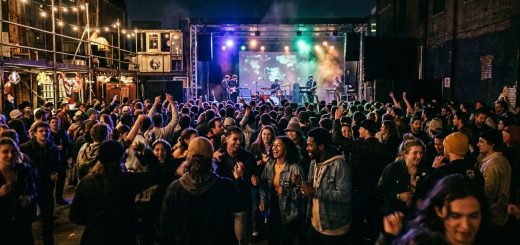
Find the live streams and small venue shows. Many of the most exciting performances are not at big festivals. They happen at small clubs, house shows, or even online. Follow artists on social media. Look for community calendars in your city. The energy of a live jam session is irreplaceable.
-
Build a playlist that mixes old and new. Jazz is a conversation across time. Put a 1960s John Coltrane track next to a 2026 track by Nora Dial. Listen to how the language has changed. Notice what stays the same. This exercise trains your ear to hear the connections.
-
Try a crossover project yourself. If you are a musician, pick one element of jazz (a chord progression, a rhythm, a melodic phrase) and combine it with a genre you already love. Record it on your phone. Share it. The revival is built on experimentation, not perfection.
Common Mistakes When Trying to Understand the Revival
It is easy to misunderstand what is happening. Here are a few pitfalls to avoid.
| Mistake | Why It Hurts Your Perspective |
|---|---|
| Treating jazz as a fixed canon | You miss the living, breathing nature of the music. The revival is about evolution, not preservation. |
| Ignoring the role of production | The genre bending artists use Ableton Live and analog synths as much as they use horns. The technology is part of the instrument. |
| Focusing only on American cities | The 2026 revival is global. London, Berlin, Tokyo, and Lagos are all producing major voices. Ignoring them gives you half the picture. |
| Expecting virtuosity over feeling | Some of the most powerful tracks are built on simple ideas. The goal is expression, not showing off technique. |
“The most exciting thing about the 2026 jazz revival is that nobody is trying to be the next Miles Davis. They are trying to be themselves. That is where the real innovation lives.” – Elira Chen, founder of the Circuit collective.
Why This Revival Matters for the Future of Music
The impact of the 2026 jazz revival goes beyond the genre itself. It is changing how young musicians think about creativity. When a genre bending artist takes a jazz harmony and wraps it in a trap beat, they are showing that boundaries are optional. This attitude is spreading to other genres. Producers in electronic music are adding live saxophone solos. Hip hop artists are inviting jazz pianists into the studio. The walls between genres are getting thinner.
For independent artists, this is a huge opportunity. The old model required a label to categorize your sound. Now, listeners are hungry for music that defies classification. If you make something that blends jazz with something else, you can find an audience. The underground is a meritocracy. If the music is good, people will find it.
The Tools and Platforms Fueling the Shift
The revival would not be possible without the tools that make creation and distribution accessible. Streaming platforms have playlists dedicated to modern jazz and electronic fusion. Social media allows artists to share behind the scenes footage of their process. Crowdfunding platforms let fans support albums directly. The old gatekeepers are losing their grip.
For a deeper look at how independent musicians are using new technology to build careers, check out this piece on how independent artists are leveraging AI to produce chart topping hits in 2026. It connects directly to the same spirit of DIY innovation that drives the jazz revival.
What to Listen for in the Next Wave
As the revival matures, certain trends are becoming clearer. Here is what to keep an ear out for.
- Live electronics on stage. More artists are bringing laptops and modular synths into the jazz ensemble. The line between producer and instrumentalist is blurring.
- Collaboration across continents. A track might feature a saxophonist in New York, a vocalist in Seoul, and a producer in Berlin. The internet makes this seamless.
- Shorter, more focused compositions. The twenty minute jam is less common. Artists are crafting tighter songs that respect the listener’s attention span while still leaving room for improvisation.
- Visual art integration. Album releases are often paired with digital art, short films, or interactive experiences. The music is part of a larger creative statement.
A New Home for Jazz in the Underground
The 2026 jazz revival is not a passing trend. It is the sound of a generation claiming a tradition and making it their own. The genre bending artists at the center of this movement are proving that jazz can be many things. It can be a dance track. It can be a meditation. It can be a protest. It can be a late night conversation between friends.
If you have not tuned in yet, now is the perfect time. Start with a few of the artists mentioned here. Go to a show at a small venue. Listen with an open mind. The music is alive, and it is waiting for you to join the conversation.